5 Books That I Haven’t Read – And No Longer Care About


Ok, so these aren’t the only 5 books I haven’t read, of course. They also aren’t, I’m quite sure, the most significant 10 books that I could’ve allowed to pass me by. They do however represent a point that I’m glad to have reached in my life, where I don’t give a shit anymore.

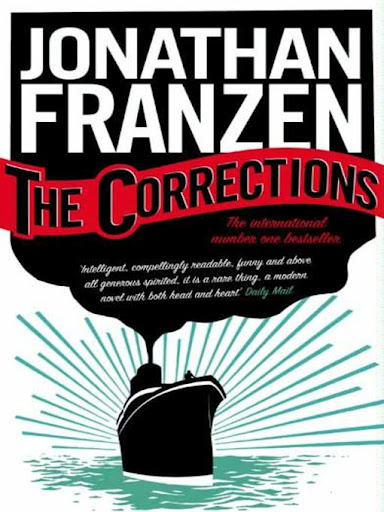
1. The Corrections, by Jonathan Franzen

The Corrections, Jeez. Enough with the fucking Corrections already. I get this one at least once every 6 months. ‘Oh god mate, it’s amazing, it’s just so well created and truthful.’ I’m quite sure that it’s great for you but, for me, I couldn’t get started with it. It’s a lump of a book so if you’re struggling to give a shit after ten pages then it takes a strong resolve to bear with it, in the hope that the next 590 pages will redeem it. If I want multi-layered familial angst and revelations in my books then I’m fine for that already thanks. Read Strong Motion a while back, it was ok. Moving on.

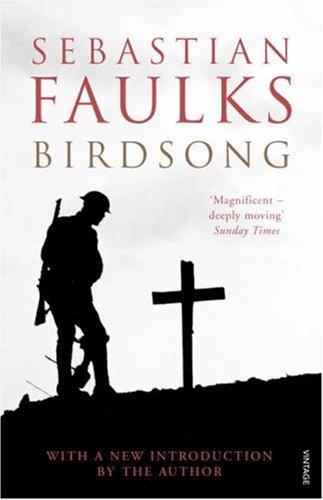
2. Birdsong, by Sebastian Faulks

I think the problem here is Sebastian Faulks, and also the subject matter, so it’s not off to a great start. Faulks seems a bit of a poncey knobber to me, and one who is inconsistent in his subject matter. So, he comes across as a bit of a writer for hire and that suggests a lack of credibility. I’m sure that he writes beautifully but I’m reminded of a girl I knew who got an ‘A’ in art A-level because she did the work properly, not because she embraced the art, it’s the same thing to me. Also, I can and do read lots of books on WWI, usually by people who were there, and that’s good enough. Goodbye to all that, anyone?

3. Pride and Prejudice, by Jane Austen

This could indeed have included anything by any of the Bronte Massive, or Austen, except Jane Eyre. This is not my idea of a good read. It’s not I think because it’s all heaving bosoms, fluttering eyelids, unspoken angst and contempt and class hurdles, although that doesn’t help. It’s just all a bit wet, and about a time I don’t care much about. These high-born people and their troubles, in the same period that Dickens was writing about the lower classes, just mean nothing more to me than pretence and I’ve tried and failed on numerous occasions to get through any of this tripe. I do like the Laurence Olivier film though.

4. The Time Traveller’s Wife, by Audrey Niffenegger

High concept books really flick my switch and I had high-hopes for this when I first heard about it. I like the philosophy of time travel a lot  and books that play with it generally get my vote. However, the more time went on, and the more I realised that it was not really that kind of book, my fervour waned to the point now where I almost phase it out of my vision when I see it in EVERY CHARITY SHOP IN THE WORLD. Falls into the same camp as the Ukranian Tractors book – made out to be high concept, actually a differently written romance/feelings book. I’ve nothing against feelings, I have my own in fact, therefore I want more from a book.

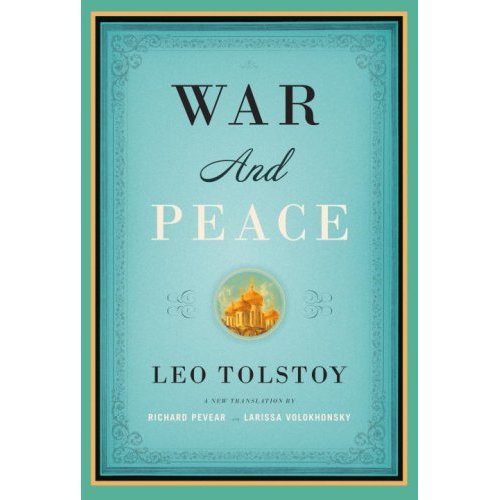
5. War and Peace/Anna Karenina, by Leo Tolstoy

I don’t mean a double volume of the two of course, imagine the size of the thing. What I mean is that, to me, they’re interchangeable and have nothing to interest me, as far as I know. As with everything on list, people who’ve read and loved them would say ‘Just persevere, give it another go!’ No, sorry. Massive books about people struggling and dying in the bitter wastes of Russia, meh. I’ve tried W&P and have a lovely copy at home, but it’s for show really. Do you want it? Bung me a couple of quid and you can use it to maybe elevate a spider plant with.

Clearly this list could’ve been 10, 20 or 30, but I can’t be bothered, and neither can you. I think an even more interesting list (‘more interesting than this?’) would be one of the most often seen books in Charity shops, as well as Time Traveller’s Wife, and every Lisa Jewell and Jodi Picoult book in existence.

Things that I need to stop doing, right now.


The epitome of money wasted on 'lunch'

We all do things that we know that we shouldn’t, be they health, financial or social things. Sometimes they’re things that we abhor in others, and think that they don’t notice us doing. Sometimes they’re things that we even bullshit ourselves into ‘believing’ that we don’t do them.

This list isn’t quite the same as that. Instead it’s a list of things that I definitely do which are not only a waste of my time, and other people’s time, but they are easily fixed and frankly embarrassing that they are still an active part of my life.

Disclaimer: There’s nothing racy, dirty, disgusting or controversial here. That may mean to many people who know me that it’s an incomplete list therefore, but, one step at a time.

1. Buying Books

I own, without any exaggeration whatsoever, around 1000 books that I am yet to read. In fact, I would put that estimate higher, except that I can’t remember how many books are in the attic. I have always loved books. From the inherent value of the ideas, feelings and information within the pages, to the tactile nature of the bound paper itself. I’m also a book poseur, and I love to be surrounded by books. And I am. Surrounded that is. So, I am not going to buy any more books until I have made a serious dent in the ones I own, and given away or sold a goodly amount of them thereafter. Plus, we have libraries. And I know plenty of people who own books I don’t own, and people (generally) like to share books.

2. Holding Grudges

I am not terrible about this, especially not since I have gotten a bit older and realised that most shit doesn’t matter, but I still do it. Usually it’s over very tiny things, which I am over-playing in my mind, and will forget about anyway but, for that brief moment at least, I decide to be annoyed at someone for having ‘done it’. I even, pathetically, do this to myself. It’s when I transgress my own sensibilities and do something I wish I hadn’t and decide that I’m going to punish myself in some way. Not physically, although it’s not a bad idea. So, no grudges, or sulking either.

3. Posting Comments on Facebook

There is little to recommend the person that posts frequent comments on other people’s Facebook posts. I don’t mind getting comments generally, but that’s because it happens with slim regularity from my modest group of ‘friends’. The person who posts tremendously sharp, witty and often snarky comments on peoples posts, announcements, photos etc all the time is a tool. I fear that I am likely to be approaching, or already be, that tool. I use Facebook infrequently enough to find it an often pleasant diversion so won’t remove myself entirely, even though that may be a godsend for some people.

4. Prevaricating

Kidding myself into thinking that I’ve got just one more thing to do before I get on with this more important thing. It happens all the time and when I’m in bed, having wasted another evening, I bloody curse myself for it. The old adage is that ‘There’s no time like the present’ and that is absolutely true. Just get on with it and get it done. Or, at least start it. Once you’ve started it then there’s less to do. I berate other people in just this manner and it’s time I started taking a dose of my own medicine.

5. Buying Lunch

All the flipping time. £5 here. £7 there. £9 someplace else. It takes a little organisation and there’s no need to go and buy lunch everyday, but I fail constantly in this. I never used to though, and I had much better lunches, and had much more money as a result. I rarely enjoy the lunches I buy either, which is a double-whammy. When I worked in Bristol and could go to the Real Olive Company it was great. Pricey, but great. It’s fine to sit in a cafe now and again and chill out for lunch, but pasties and sandwiches are too often rubbish that costs too much and tastes too little.

6. Spending Money on Crap

See ‘Buying Lunch’. But, not only this, it’s the fallacy of consumerism as verification of success and achievement. Even at a low level this happens and you find yourself wading through things you didn’t want that you bought with money you can’t afford to waste. Books are a primary example of this, but they aren’t quite crap. Other than this it’s the extra things that you say to yourself ‘It’s only a few quid’, but do it so regularly that you’re actually storing up landfill, and paying through the nose to support it. I plan to try to only spend money on doing things with people I like.

7. Staying up late

I am 34. I am not 19. Therefore I get more tired than I used to, and that is a fact. I used to watch a film at 8pm, put on another at 10pm, and even another at 12pm. I often used to survive on 4-6 hours sleep per night. But I can now barely function by the end of the week if I go to bed after 11pm for more than 3 nights in a row. Also, I do this because I value my leisure time and resent using it up with sleep, just so that I can be more wide awake for work the next day. It’s my time and I want it! Work it out and the answer is nothing to do with staying up, it’s to do with not valuing what I’m storing the sleep up for, so that’s what needs to change, now get to bed.

8. Eating Crap

I never used to do this, at all. Not that my body was temple or anything. I just realised that I was not one of the lucky people who could eat whatever they wanted and, instead, decided not to eat fatty and sugary things, because it would be a ballache to burn it all off again. But, since having the kids I’ve noticed, I eat rubbish. A biscuit here, cake there, bread all over the place. Not so bad if you’re burning it all off, but I am certainly not doing this. The answer is to do a lot more exercise but, really, I don’t even enjoy eating it all that much. I love a custard cream now and again, of course, but it’s just become a habit, and a rubbish one at that.

9. Dropping Phone Calls

This is easy to remedy, you would think. It falls kind of into the Prevarication camp in a way, in that I convince myself that I’m too busy to take the call. I am NEVER too busy. It actually boils down to me not being sure what the person wants, or what I’ll say, so I avoid it. What a stupid thing to do. Sure, sometimes I genuinely do miss the call, and sometimes it seems too late in the evening to call back, and then I forget and blahdy blah blah. A bit more effort, that’s all it takes.

10. Making Life Harder for Myself and Others.

Almost all of the above boil down to this. By trying to make life just a bit easier I will, by definition, stop doing the daft things above. Stop spending money on things I don’t need and there’s more money for things I do. Get on with stuff I should/could be doing and there will be more interested and happy people around. Stop being a dick about things, and the same should happen. It’s not world shattering stuff, but it seems rather easy to do, so why not just do it?

In a true multi-media world


I read a, frankly spurious, statistic the other day.

It said that 29% of American adults now own an e-reader or a tablet. This was up from 8% the year before. The reason for this was down to various sales incentives – the Black Monday’s on Amazon and B&N, and both the rise of the iPad2 and the launch of the Kindle Fire.

To be straight, I don’t believe that statistic. It wasn’t from a very big sample group, and the comparison group used was a different age range. So far, so nonsense.

However, there can be no doubt that we have now the greatest possible choice of media consumption that the world has ever seen. And not just a choice of ways to access media, the actual media itself. Or, do we?

The bemoaning of the loss of the book, to the vicious and nasty e-reader, is a cry of moral indignation that’s disguising a statement of ignorance and snobbery. E-readers work. They’re light, read nicely, are unbotrusive and, relatviely, cheap. So, what’s the problem? The problem is that they’re not a book, and anything that’s not a book is often seen as having less virtue than a book. Which is patently waffle. Nearly everyone I have ever heard say they wouldn’t buy an e-reader has never held or used one. So, grow up, is the advice here.

To be straight on another thing though, I don’t think that I’ll buy an e-reader. Mainly because I don’t have the spare cash to buy something I don’t need, but also because I already own a few thousands books. And, I like books. I like the tangibility of a book, the luxury of bending and flexing a book, and riffling its pages. For exactly the same reason, I don’t buy hardback books. That people still make hardback books amazes me frankly. Unless there really are enough people who’ve got time to sit in large armchairs and read them, because you can’t lug the bloody things around with you. I don’t even possess the wrist-strength to hold them up for long enough.

So, it’s not that our media access is particularly engendering loads of new and exciting media to consume. Blogs, the one really new thing, have quickly become boring and self-indulgent. About 20 people per day read this blog, which isn’t too bad really, but they’re probably finding it by accident. True, pre-existing media, with a large investment need, have made the leap to new media, newspapers and magazines, but only a few dozen are really doing something new, most of them, with their over-complicated and ‘one size fits all’ websites, are derivative and paying the price.

What the multi-media world has shown me is a greater appreciation of traditional media. I love to buy the paper, read a book, and flick through a magazine. And, so do you. We hear about the massive declines in sales of papers and magazines, but that’s because there was such a massive growth in mass-media in the 80s and 90s, that a slump in the 2000s and 2010s was inevitable. I’m not worried about it.

One specific reason I’m not worried is because people who are passionate about media, as with all things, will still give it a go and be appreciated for their efforts. Around Sept 2010 I sat down for a coffee with Helen Martin, who was trying to get a magazine together. With my commercial hat on I listened to what she was thinking of doing and realised that I had the wrong hat on. True, I couldn’t see the commercial angle, but that’s because there wasn’t one. This was a concept borne out of desire, not out of profit. True, she also wasn’t actively looking for a way to empty her bank account, but this was more than a cash cow idea.

I filled her head to far too much business stuff for one so young and carefree and she left dazed but politely thanked me anyway. I would have liked to publish the magazine, edit it, maybe write for it but, at that time, I just didn’t have the time, and she wouldn’t have heard of it anyway! I like to think that I helped her to make one important decision though, and that was to self-publish, not to let a business, with a bottom line and debts, take it on as a money-maker. They would have killed the inventiveness and passion within two issues, and that would have been a dreadful thing.

The conclusion? There are lots of ways to find our ‘fix’, but it’s the quality of the fix which is far more important. Kindle versions of the Dan Brown novels just mean that you’re going to have to read a load of shit Dan Brown novels. Spending a few quid on a magazine that is the literal result of one person’s blood, sweat and tears has value you can’t really quantify in the real world.

http://www.lionheart-mag.com – go and buy one.

Trilby Hats


I have noticed, with not a little ire, the continued presence of hat-wearers on the streets. By this I don’t mean woolly hat wearers in this, no, I mean statement hat wearers. I’ve made this point before, here, so there’s no real need to go over it all again, but it’s reasonable to reiterate just why these bloody silly people should just stop buying ‘cool’ hats that actually make them look 100% spannerish, and make everyone else want to dig their own eyes out.

Hats are not in social position anymore. A hat wearer no more indicates class and distinction than does a retinue of bloodied slaves or an ivory waistcoat. They are out of time and place and, more to my own chagrin, not looking like coming back anytime soon. There was once a time when men wore a hat, and looked jolly decent whilst doing so. But not anymore, and I think this charming graphic illustrates this point perfectly.

Being a Dad. What you aren’t told


Becoming a father is, of course, a wonderful thing. I’m not setting out to suggest that it isn’t. So, don’t worry y’self.

No, what I’m going to bang on about is the strangely secret things that you don’t get told about prior to becoming a father.

There are lots and lots of fantastically horrifying things that you get told, when you’re already shitting yourself at this point. You’re told mainly that you’ll watch your dear wife/partner/surrogate become a screaming, bleeding wreckage. You’re told that you’ll have shit everywhere, no money, no sleep, no personality of your own.

There’s some truth in all of this. But, it’s mostly horseshit, and there are loads of other things that, as a two-time dad myself, and knowing lots of other new-dads, I can safely attest to.

1. Superfluousity

Actually you will become bereft of personality, but only really during the birth. You may be part of a strangely new-age family that discounts the father as a non-essential component post-birth and, you know, if that’s you then get the fuck of there.

What I’m talking about is actually during the birth itself. You need to be around, but you have next to zero importance in this world at this point. The lady giving birth is the centre of the universe right now and you are a minor moon. However, as a dichotomy, you have to be around when a hand, a look, a squeeze, a curse is needed.

It might surprise you, but you will suddenly not get any of the attention you’re used to, for the time it takes. Then, suddenly, you’re back in the frame and have to do everything and you’re important again. But, things have changed, and you know it.

2. The Laughs

The main thing that it astonishes me that no-one talks about is the laughs.

Children are funny. Really, really funny. And you’re their dad, so you’re the funniest person in that child’s life for the next 15 years at least, maybe their whole life!

We, as Dads, are petrified of everything and rightly so. But, why doesn’t anyone tell you about the laughs?

I hope that I am not unique in this, but I have had more laughs with my children, before they were even 2 years old each, than I’ve had anywhere in my life. Kids are brilliantly funny, because they don’t care about anything, will say anything, will do anything and try anything.

If you chill the fuck out about things, then you’ll have so much fun you won’t believe no-one told you. Make sure you tell everyone else.

3. The Shit

The biggest scare story that you get is the sheer volumes of shit that are going to pour all over you from the moment your child is born.

OK, so babys shit. *Gasp*. Did I read that right?

Of course they do, for goodness sake. All babys do is poo, cry, eat and sleep for a good while. But, you poo, don’t you? Did you ever own a dog, or a cat? Know anyone who did? Ever see a dog poo on the pavement?

Poo is not a big deal. The way it’s sold to you is like it’ll be sprayed around the walls and into your face 24/7. As it turns out there’s a small, helpless creature that needs to be cleaned up quite often, because they can’t do it, and there is literally nothing that you would rather do than be the person who makes them clean and tidy again. So, it’s no shit.

So, anyway, there’s more to this, but enough for this post. Fear not Dads, it’s nowhere near as bad as they say, and loads better than they say.

The Bent Leg – A pose, or an affliction?


Pigeon toed idiot pose

The general oddness of fashion models, or indeed anyone who’s having their photo taken for publicity purposes, is manifest in the very fact that they’re doing it at all.

This is an image issue, and next to nothing else. It’s a simple capturing of visuals with the intention of making the viewer impressed and enticed.

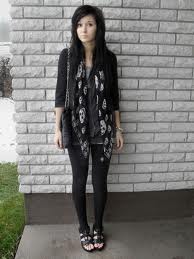
So, when I see the bent leg syndrome, the ‘Polio’ look I am hereby christening it, I’m baffled.

I find it troublingly difficult to ascertain exactly what the purpose of the look is. I have one minor theory, and it’s that they are attempting to appear gawkyly vulnerable.

Now, I’m no expert, but attempting to actively look like a victim, either of a debilitating bone-wasting disease or, perhaps, of a forthcoming abduction, is one that’s passed me by.

It’s such an active and prevalent look too, that it’s clearly become second nature to people. Do they walk like this too? Like they’ve got a club foot? Is that the idea? I’ve not seen anyone wearing one Manolo Blahnik built-up shoe, to give them the full, crippled, effect.

Ah, I don’t know though, do I. This waifishness nonsense may peak, with people getting a leg removed at the knee, or having sleepovers where they take it in turns with blocks of wood and a lump hammer, hobbling each other, like girls in the past piercing their ears, the squares. And, then it’ll pass.

In their older years, when their grandchildren (born via c-sections of course) ask what happened to them, as they lie in their bath-chairs, or prop themselves up on their crutches, they’ll say ‘Oh, it was just a fad. Now, help me over to the vomiting bucket, will you?’

Should a fashion model ever model me?


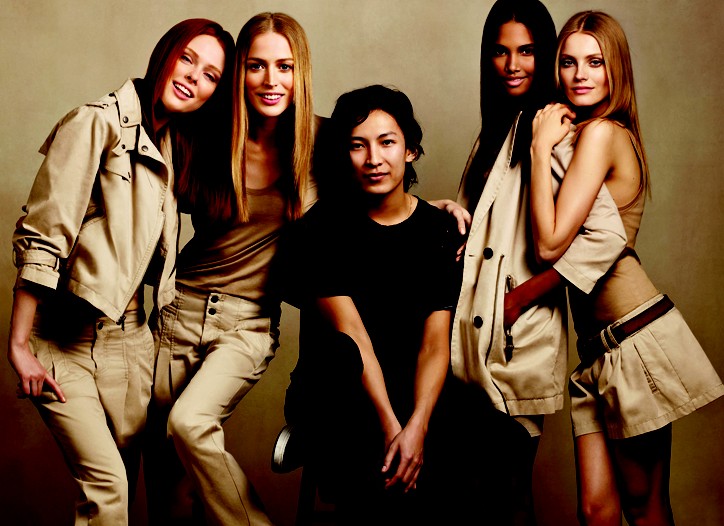
There has always been an element of otherworldliness in the modelling world, where the walking clothes-hangers are encouraged to be ‘un-human’ and elevate themselves, and the clothing that they’re crowbarred into, above the common herd.

Where does your lunch go?

Staring dimly or intently into the middle distance, poking elbows and hips out at strange angles and sucking in their cheeks with such vigour that it’s as though they’re trying to create a black hole on either side of their face. They want to look alien, distorted and unusual.

Is this so ridiculous though?

Well, yes, of course it does look ridiculous but, if models looked like everyone else, then there’d be no aspiration to be willowy and interesting and no-one would be interested in the clothes that they’re wearing, which would be no good for the designers, brands and retailers.

I mean, if I see a slightly podgy, unkempt and tired looking man in his mid-thirties stumbling down the street I don’t think ‘Gosh, look at that guy, I wonder if I can get that jacket and look like him’. In fact, it probably is me, and I’m about to walk straight into a highly polished shop window.

So, do I think the fashion world should make their models look like everyone else? No, I do not.

But, this is quite an (ironically) unfashionable viewpoint. People these days want models to look more and more ‘normal’. Skyscraper tall and painfully thin models are considered to be irresponsible. Irresponsible on the part of the fashion world this is. Maybe, at a push, it’s the ‘fault’ of the designer label in question. It’s never the model’s fault though. I’m sure that models take great effort to maintain a sinewy frame, but they are generally selected because they’re predisposed to look like that. I’ve never seen photos of any runway models in their later years, with them having ballooned like Kirstie Alley or Oprah.

So, the main issue is really about body image. It’s the argument that very tall, thin people create a depressed Britain of people who want to be 6ft tall but can’t because they come from a long line of Anglo-Saxon or Celtic pit workers, and not from a long line of Russian wolf-hunters. People are apparently too stupid to realise that they are the shape they are for a reason, and it’s not  because they’re ‘wrong’.

Yes, yes I know that lots of young people feel a terrible pressure to confirm and be perfect, and there are a lot of reasons for this. Images in magazines, advice columns, the earlier and earlier sexualisation of children and young adults, aspirational fame programs, and the ever-increasing rise of the cult of Celebrity. It’s all rubbish, but I can’t help think that there’s always been stuff like this going on. The common response to that argument though is ‘Yes, but it was never as bad as this!’ It was though, you just can’t remember because you’re too old, man.

I’m a relativist, so I don’t get too wound up by this kind of thing, but there is one aspect I find a little chilling.

Look at you normal lot then

Shops, and high street retail brands in particular, are actively promoting themselves as more representative of ‘real women’. Magazine’s got themselves all righteous and holy a while back and started to talk about ‘positive body image’ and ‘real women’. Dove soap talks about real women all the time. It’s a crock of shit, of course, as the ‘real women’ they promote are always blemish free, lovely and happy looking, have got wonderful hairstyles, no crawling stretchmarks or razor burn. In short, they’re not real women, they’re just different shaped women.

This isn’t the issue though, it’s the shops promoting real body shapes, but then surreptitiously choosing everyday ‘girl next door’ type models who just happen to weigh 12oz. They’re not cyber-models from Jupiter anymore (unless you watch the catwalks in Milan etc) but they’re still unusually talk, thin and unrepresentative. But, they’re supposed to be, but they’re not, but they’re supposed to be, but they’re…(you get the picture).

Fortunately I’ve never been so concerned about fashion that I feel the need to respond quickly to changing trends, and therefore find myself constantly disappointed when the ‘outfit’ I buy doesn’t look like I thought it would. But, I realise that it is not me that is at risk here and, if magazines and newspapers weren’t so in thrall to both advertising, and the seeping pressures of surrounding cultural mores that they can’t control, then I suspect that they might address it a little more seriously, and consistently.

Film Review: The Day of the Jackal


I’ll put my hands up here and admit that I am in awe, not only of this film, but of its lead actor, Edward Fox, the Jackal himself.

The bloody Jackal

I make this admission so that you can accept from word go that this is not an impartial and purely technical review. It is, in essence, a mini-sermon on why I think I love it so much, and why I think you should too.

Firstly though, a nod to the book. A novel about the 1960s, published first in 1971 by Frederick Forsyth, one of the UK’s pre-eminent thriller writers. It captured everything about that time perfectly. The first generations of disaffected post-war colonial youths, abandoned by their leaders. The British, proud and self-righteous, the French, disorganised, disillusioned and delusional. To the rest of Europe, and even in most of France, the French-Algerian conflicts were a seen as but footnote to the massiveness of the Second World War and, for those inside it, this was too much to bear, and too much to forgive.

So, Day of the Jackal is the story of Algerian separatists deciding to create the biggest terrorist upset they can by killing Charles de Gaulle. Hero to millions, villain to many others. Although the majority of the plot and story is fiction, its basis is true. The OAS did exist, an unnamed assassin did kill for them and, well, who knows what else is true or not with people like Forsyth and le Carre and what they write.

The film, released in 1973, was initially a failure at the box-office. There’d been a lot of this kind of thing in the 60s and people were moving away from stoical political thrillers. However, critical acclaim and increased appreciation have made it a bona fide classic.

What the film does perfectly is create a sense of place and time and, most importantly, pace. It is shot at such a speed as to leave no stone unturned and yet allow the viewer all the time they need to gather the details, understand the actions and reactions and stay up-to-date with things. This is vital to such a wide-ranging set of characters and motivations and is where the latest Tinker Tailor adaptation falls down for many.

We follow the Jackal’s protagonists to their desperate conclusion, born from their prison-like existence in a stuffy Rome apartment, to bring the man himself in. He sets out his terms clearly and with complete confidence and this, in turn, sets the tone of the film straight away. We know in the space of 3 minutes that this is man with which we would not wish to fuck. The OAS know it too and straight away take orders from him, robbing banks to pay his fee. It’s then that he gets on with job.

The preparation process is strangely gripping. Because it is so deftly handled, with no pauses or second thoughts, we buy into the Jackal’s actions and quickly start following what he’s doing and how he’s going to eventually kill his target. The main reason we follow it so gladly is because of the man himself. Fox is the absolute epitome of English upper-class confidence. He is good-looking, suave, well-spoken, well-dressed and confident. Everything we want to be, and aren’t.

From his false identities, border crossings, liaisons with other ne’er-do-wells and the ruthless efficiency he shows in dispatching people who may compromise his identity or safety, we follow him obediently, almost willing him to succeed. Which is why the second part of the film is so clever.

After a kidnapping, and brutal interrogation, one of the OAS workers gives up a name and the French police work out that there must be a hit on. But, with De Gaulle refusing to be dictated to by terrorists, and no actual crime having been committed they cannot openly pursue anyone or act officially. So, the French interior ministry call on the police for their best detective, Claude Lebel. The manhunt is on and Lebel uses his equal cunning to guess and second-guess the Jackal’s actions, tracking him relentlessly.

Finally, when the hit is on, on Bastille Day, Lebel catches up with the Jackal at the last second, spraying him against the wall with a sub-machine gun. Even though we know the Jackal, admire his work, his style and resources, we are glad that Lebel gets him. It’s that clever a film to give a denouement that you buy into.

So, the characters are the film really. The pace is perfect, the colour and style are deftly managed to create the scene and not detract from the plot, but it’s the characters who make the plot move ahead.

Claude Lebel is the level-headed detective – thoughtful, passionate and patient. The Jackal is the level-headed killer – thoughtful, pragmatic and patient. It’s a duel really, played through three parts. That any film can have such a successful start, middle and end is rare. To do it this well is almost unique.

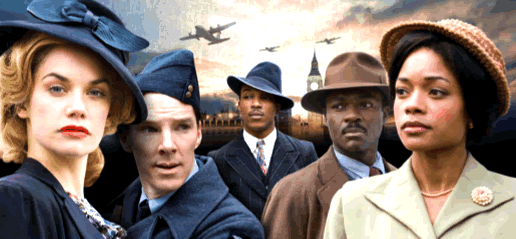
Book Review: Small Island, Andrea Levy


A little while back I thought it’d be a neat idea to start an online book club, to encourage myself, and other engaged but slightly isolated reading folk, to have a common reading goal, and maybe discover some new books and authors along the way.

A fine idea I hear you say. Why, thank you. I thought so.

So, the first book off of the shelf for this laudable endeavour, selected very much at random from the many tomes I own but haven’t read, was Small Island. What a choice! Oh, yes indeed. Whitbread award-winning, greatly praised, benchmark book and career defining title for the very pleasant and intelligent Andrea Levy.

The trouble is that it’s not very good.

That’s a little unfair I suppose. It’s not rubbish, or even close to that kind of dismissive labelling. It’s a fairly hefty, wordy and broad book. It’s got a lot of characters, plot lines and events, some interesting vignettes and some genuine shock points. But, and there’s always a ‘but’, it is a beige book. It is neither here nor there, takes zero risks, and spends its entire time making sure that everyone is well-represented and will be happy with how they’re dealt with. Apart from the Americans. If you’re American, you might feel hard done by.

Small Island is the story of three people (or, really, 6 people) and the effect of the influx of West Indians to Britain during, and following the Second World War. Hortense is the haughty, well-to-do, Jamaican girl with schooling and high ideals of herself, Gilbert is the optimistic and go-getting Jamaican man with fire in his blood and a surety of his place in the world if he can only get to Britain, and Queenie is the salt-of-the-earth Yorkshire lass who ends up in London, determined to better herself, but has crawling self-doubt and a sense of inner destruction.

So, Queenie enters a loveless marriage and ends up bedded by a Jamaican airman, falls pregnant, shows her redoubtful character in the face of clear prejudice against the immigrants and stands up as a beacon of acceptance and liberalism in a Britain of sly looks, snide comments and judgments. She’s feisty and meant to be impressive, and comes off like any one of a billion diamonds in the rough types.

Hortense comes over to Britain looking to expand on her teaching educations and ambitions, is impolite to and affronted by the caustic reception she gets and is astonished that it falls below the high esteem she not only holds herself in, but believes that she should be held in by everyone else. She is shocked at every turn by the lack of Englishness in England, and finds both her new countrymen, and the ones she’s left behind, equally distasteful. She is unlovable, tiresome and unsympathetic.

Gilbert is a man with no preconceptions about England, or how well he’ll be accepted. Ultimately he knows that Jamaica is running out of opportunities and surely, with some hard graft, he’ll find a future in the mother country, from whence he’s served his duty in the war. The reality is the racism and prejudice he faces and stoical way he handles it, and tries to impress and please Hortense. He is charming, but daft and slightly unbelievable in his strident morals.

So far, so stereotypical? Yes I’m afraid. This book is as formulaic as you can get, with no surprises whatsoever. Levy has, in all fairness, layered story atop story, and the historical accuracy of it all is testament to her diligence in research and realism. But, it does not make for a gripping book. Maybe it wasn’t supposed to, maybe it was designed to display the mediocrity and normalcy of these human hardships. It reads like a 1940s EastEnders though, and that is not a great advertisement.

Where Small Island is lifted is in its vignettes. The tinier stories act as blessed relief from the main themes and characters and, when forced to go back to the Queenie/Gilbert/Hortense storyline I found myself a little deflated.

Bernard, Queenie’s feckless husband, has the best diversionary story, with his part of the Indian uprising and life changing experiences, shaking his being, all out of Queenie’s gaze, delivering the only subtle piece of storyline, inasmuch as Queenie never knows what Bernard has gone through. Bernard’s father is a great character and his death truly sad, Queenie’s Yorkshire family life is similarly interesting and dispensed with. Levy couldn’t keep everything going, of course.

The side and back stories are the really interesting bits, maybe because they are so lightly handled and left with lots not discussed or exposed. The fact that the main story and characters are so intimately handled, I feel, reduced them to really being quite boring biographies and the denouement of the book is frankly just silly. I won’t spoil it, but it may spoil it for you anyway.

So, nothing ventured and nothing gained is my analysis of this book, and what it actually is itself. As a piece of dramatic fiction it, well, isn’t. As a historical novel it succeeds in its accuracy, but there are plenty of much more interesting and detailed books about multi-racial armies in WWII and the influx of immigrants post-war. For people who didn’t know anything about this period in history, and like some gentle drama, then it’s clearly won lots of admirers, but for readers who want more meat on the bones of their books, they’ll come away from this still feeling rather hungry.

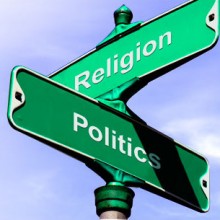
Politics and Religion


Politics and Religion? Phew, OK then, here we go.

The benchmark of modern civilization, and the defining instrument which has pulled educated and responsible people away from bludgeoning one-another over the head with the discarded leg bones of their devoured foes, is the ability to discuss matters and reach conclusions, whether compromise or consensus, that make sense for everyone to carry on with their lives. Hopefully, with lives that’ll be a little better even. This ability to discuss and rationalize, to debate the wider picture and encapsulate the differing views of the many, not the few, and create a better place to be for the many, and also not the few, is what underpins the political systems of all developed countries. We believe that the viewpoints of all people are worth considering and that there are people who should be chosen to represent those views.

Now I know that we’re all supposed to say, by default, that all politicians are liars, crooks, non-representative upper class ‘haves’ who can’t, don’t and seemingly won’t relate to the ‘have nots’. This is the ‘right on’ approach to take and I often agree with it. But, for every George Osborne there’s a Robin Cook, for every David Cameron there’s a Mo Mowlam, for every Peter Mandelson there’s a Tony Benn, for every Tony Blair there’s a Dennis Skinner etc etc. You should get my point here, politics is there for the common good, is managed with good people at least involved, and is all about the people being heard and acted for.

Religion on the other hand is the opposite of this. There lots of good people involved but it is, at its core, the ancient, perpetuated dogma of a handful of pieces of parchment, from a country that no longer exists, in a language nobody speaks, about people who are either dead or, more likely, never existed. It is a series of doctrines without evidence, without proof, without reports, examples, testing or checks. It tells you, but doesn’t stand up to be counted. If it’s wrong, then it’s your fault, not its. Your, mine or anyone else’s opinion about it is irrelevant because what we think or do will make no difference. We are less important than it. It supersedes us in value.

Now I know that we’re supposed to recognize the ethical and moral good that religion does. How it guides and saves people, and how it steers people through life’s desperate and difficult choices. How it balances the worries and temptations of good honest folk and helps them take the right steps. This is laudable and there are plenty of good people in the church, mosques, synagogues etc. But, for every Community Outreach Project there’s a Pro-Life Demonstration, for every Soup Kitchen there’s a vote against same-sex unions, for every Church Fete there’s a Crusade, for every Blessing there’s a Condemnation etc etc. The point here is that there are good and bad people and religion basically makes no difference to the way someone chooses to treat other people.

So, why compare and contrast these seemingly diametrically opposed ways of life? These ways of living and existing?

Simply because they are unfathomably welded together. Even now, in an age of almost limitless scientific and philosophical awareness, where we know the shape of the Earth, where it is, how it works, why things do what they do, why we die, why the Sun comes up and why we aren’t surrounded by celestial beings, goblins, deities or anything else.

That we are led then, in every single national leadership, whether political, dictatorial, monarchical or otherwise, by religiously determined people is flabbergasting. What is even more bizarre however is that we don’t mind! Seriously, no-one minds do they? We completely expect and accept that our leaders, the people calculating the taxes, deciding on policies, starting wars, delivering grants and aid and whatever other mind-bogglingly massive and important tasks they carry out, are led by a belief in a person/spirit/goat/insert whatever here that they and no-one else can see, or ever has. But, not only this, they are happy to admit it!

When I hear a politician say that they are comforted, or guided by God (and it’s usually God, because it’s usually UK or US politicians I hear about) I cringe and sweat. There are a number of reasons for this, and they are all pretty justifiable in their own right, but here’s the crux of it: You’re working for me, not God.

There are loads of reasons why I don’t like people rabbiting on about religion, but that’s not the point here, the point is that these people, politicians I mean, are supposed to be carrying out a mandate from masses, not from a singular (or trinity) imagined being. God, as far as I’m aware, is pretty much capable of taking care of itself but you, mister Prime Minister/President, are suppose to be looking out for the 60-250m people that you’re responsible for.

Imagine for a second if, instead of God, your chosen politician references Father Christmas as his prime motivator and justification for the decisions he’s made and the actions that would follow, the deaths that would occur, the debt that would accumulate, the lives that would be wrecked, the environment that would be destroyed. ‘Father Christmas’? This isn’t that difficult a concept to grasp. He definitely ticks far more of the benevolent instead of wrathful boxes, and he’s equally conjoured up. But, that’s silly, isn’t it? Everyone would just say, what the fuck?, and have said polictian led away to a cosy armchair and start pushing through some little used legislation to get him away from the big red button.

Not for a good old fashioned, honest to goodness Yahweh worshipper though. Oops! I meant God. Christians don’t really know God’s real name. But then, they don’t really know very much by and large, which is largely the problem with religion. But then ignorance is bliss, which is why religion is so comforting to people. However, what is not comforting to me is why, in a free and democratic society, where religious worship and church attendance is in decline, do the British public not question why their elected leaders seem to happily admit that they take their guidance and decision making skills from a separate, singular authority, that has nothing to do with us?

Religion and politics are not one and the same. They may have crossed paths many times, and been pointing at or driven by the same things, but so have lots of things and they don’t encroach on the political process, apart from through the political process itself, which is what it’s there for. Why do BBC/ITV/SKY news ask the Archbishop of Canterbury his thoughts on anything world or country shiftingly important? My postman is as qualified. Maybe more so, as he deals with real people far more often. Is he less morally or ethically qualified to speak about race, poverty or crime? You should feel ashamed if you think so. I like Rowan Williams, I think he’s pissed off that he’s got himself stuck with the cassock, because whenever I hear him talk he sounds very sensible and measured, but then he brings up the fact that he thinks that there’s a ghost in clouds who decides everything and I sigh.

Politics is there for everyone and by sidelining it with religion you are stifling that. The argument that claiming religion is a vote-winner sickens me and, even if it’s true, is just pandering. No UK Prime Minister is going to say evolution is a lie, or that the Ark was real, or that it’s OK to attempt to repopulate a desert by sleeping with and impregnating your daughters, but they will say that they have a ‘belief’ or a ‘spirituality’ or a ‘faith’. This is cowardice and pandering to the diminishing minority but, perhaps unduly loud, opinion formers.

Religion may help people, but it’s a cop out, a dodge, a side-step from the difficult questions and problems of this world. That’s OK for a farmer, or a bus driver, but not for a world leader, and certainly not when they’ve said they’ll do the right thing by everyone. Being finally judged by God is not the get-out clause either. You are being judged now, so do that right thing. It’s hard, and it’s meant to be, otherwise everyone would be doing, but they’re not. We’re trusting you to.
Design a site like this with WordPress.com
Get started