Film Review: Mad Max: Fury Road


mad-max-fury-road
Tom Hardy, suddenly realising he’s in another shitter.

Before the advent of YouTube, streaming and the sharing of MP3s, people made loads of money selling singles. It was a boom industry, flogging £1.29 cassettes or £1.99 CDs to fans, or just curious musicos, by the bucketload. Billions, it was worth. A bloody packet. Because millions of singles got bought, and the pop charts were a tense and thrilling race to number one.

Since MP3s though, no-one buys shit. I want to hear the new Doobie Brothers single? YouTube. I’m certainly not going to get the bus to Our Price and buy it. No way. No how. No need.

What all this means is that, whilst in the 1980s and early 1990s, you needed to sell hundreds of thousands of copies to get to number one. By mid 2000 there was a number one that sold less than 18,000 copies. Now, because streaming is so ubiquitous, it’s being counted in the charts. So, you could get to number one without selling a single copy of your song.

Getting a high percentage rating for a film these days seems to operate in exactly the same way. So numerous are reviewers, with thousands upon thousands of websites posting reviews, that it’s potentially easy to get the right number posting reviews and get 90%+ for a film that is pony.

More to the point, there is such a desperate scramble to get reviews noticed, because they popularise the paper/magazine/website that has written it, that they will post lovely things about craphouse films, because they know that they’ve got massive budgets and it’s in their own interest to keep them sweet.

This foil-hat conspiracy jibe is not without purpose, you’ll be glad to hear. I know that this must be the case, because I have seen Mad Max: Fury Road.

A more disjointed, poorly scripted, badly acted, shockingly edited, humourless and pointless film I, or anyone else, is yet to see. It has no plot, no characters, no dialogue, no tension, no fear, no drama and, bizarrely, no lead actor. You’d think Tom Hardy, as Mad Max, was the lead actor. But, he isn’t. There isn’t one. Could be Charlize Theron (yet again driving more nails into the coffin she keeps her Oscar in), or even Nicolas Hoult, as he continues his X-Men-led Hollywood mission to shed any acting credibility he gained in Skins and A Single Man. No, Hardy is not it. He’s monotone, uninteresting, does very little on screen, and is in no way as mad as you’d think his name might suggest. It’s a 15 certificate, for fuck sake.

I often wonder how films like this make it out of the editing suite. I guess there’s a point at which the studio thinks ‘No, we can’t save this shit. Get it outta here!’. There are plenty of examples of this. Maybe they think, ‘Hey guys, what if we put out some guerilla interviews, saying that it’s ironic? That way people will think we never meant it to be serious or mean anything, and that it’s bullshit on purpose!’. ‘Yay! Go Carl, that’s genius!’.

More depressingly, I fear they actually know exactly what they’re doing and are making moronic films for morons. Well.

This is not a good, honest post-apocalyptic romp. It is not a barefaced shooter. It is not an unashamed action film. It’s a pile of boring, time-wasting, insulting crap. An embarrassment to the originals, and beneath all three main actor’s ability. Or so I hope.

More Reviews


I’m thinking about reviewing more films and books on this blog. Not many people read this blog but, rather than sporadically ranting or praising something here, and thus meaning this blog has no shape, would more review-y type writing be of interest?

Feel free to comment.

To get an idea of previous review-y stuff see:

The Guest

Unforgiven

Valdez is Coming

Four Kings

Tombstone

Book Review: Stuart: A Life Backwards


image

This book was one of false starts for me.

I bought it many years ago, fully intending to read it promptly but, like so many things in life, got distracted and prevaricated it out of my memory. I then lent it to somebody or other and that was that.

I then discovered that it had been dramatised, with the estimable messers Hardy and Cumberbatch. Cheapskate that I am I tracked it down online but the laptop was a poor viewing experience and, much as I was ennoying it, I bailed.

However, this third, fourth or maybe fifth time of trying, I picked up a new copy and read it in two days. What a fine book it is.

The first book (bloody brilliant debut again, dammit) by Alexander Masters tells the story of Stuart Shorter. Homeless, chaotic, drunk, addicted, abused and frequently incarcerated, Stuart is nevertheless sanguine, philosophical and an obliterator of the middle-class perceptions of the homeless.

After meeting Stuart during the arrests of the managers of a homeless charity Stuart and Alex become unlikely friends and the idea of a biography is born. An original and powerful one too.

Starting with the present day it tells both the story of their friendship and interactions and, chapter by chapter, Stuart’s own life in reverse, seeking to excavate the reasons for Stuart’s life.

This is no simple story, and there is nothing simple in either Stuart’s life, nor of any homeless person. There is no dread epiphany, no sudden event, no pivot point. These people do not operate in any space or time that we ‘fucking nine to fivers’ might recognise.

Stuart can elucidate on all matters drunken, drug addicted, violent and of the streets. His life of beatings, abuse, fights, smack, blackouts and arrests is trauma after trauma, yet his (regrettably not entirely) unique standpoint offers a lens through which we will never look, but Masters allows us second hand view.

Masters’s comic cadence, structural cleverness and freedom in giving Stuart’s voice a full reign, tells a crushing and forgettable person’s life to an audience who walk past the Stuarts of this world every day.

It won’t make you less scared of homeless, nor less suspicious, cynical or nauseous. But it will make you less keen to judge, and readier to see the person behind all the shit and swearing.

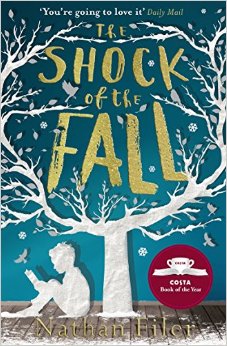
Book Review: The Shock of the Fall


image

I’m reading an awful lot more than normal these days.

Not reading more that’s awful, you understand, I’m just using flowery language to sound interesting.

How’s it working?

Anyhow, for the first time, since I was 7 years old, I’ve read a book in a day. Cover to cover. I’m serious.

Obviously I loved it, so I’m going to talk about it now for a couple of paragraphs and then, hopefully, you’ll read it and love it too, and we’ll all be happy together.

The Shock of the Fall is one of my favourite kind of books, the first novel. Always keen and raw, first novels feel like you’ve ‘discovered’ the author.
This was Nathan Filer’s project for his MA at Bath Spa, and is set in Bristol, another nice surprise.

It follows the various stages and effects on a single family of mental health problems, from birth defects to tragedy, psychosis and treatment. Written by a mental health nurse it rings with authenticity and has a humour and pathos that is golden.

Filer gladly acknowledges a debt to Mark Haddon, and this is good as the book risks being an ‘Oh, that’s just like…’, which wouldn’t be fair at all. This is character-rich, the dialogue is superb and the pace is balanced exceptionally well. That this is a first novel is as amazing as it is gutting.

Following the narrator, Simon, as he retells his whole life, you believe every word, laugh when he laughs and feel every knock and bump. There is a well crafted suspense too, not a ‘whodunnit’, or even a ‘what happened’. It’s a ‘what happened exactly‘, and that’s really clever.

Very touching and telling, as well as being both boldly and crisply written. One you’ll put down and feel better than you did when you picked it up.

Film Review: The Guest, and I don’t care what anyone else says…


…it’s total shit.

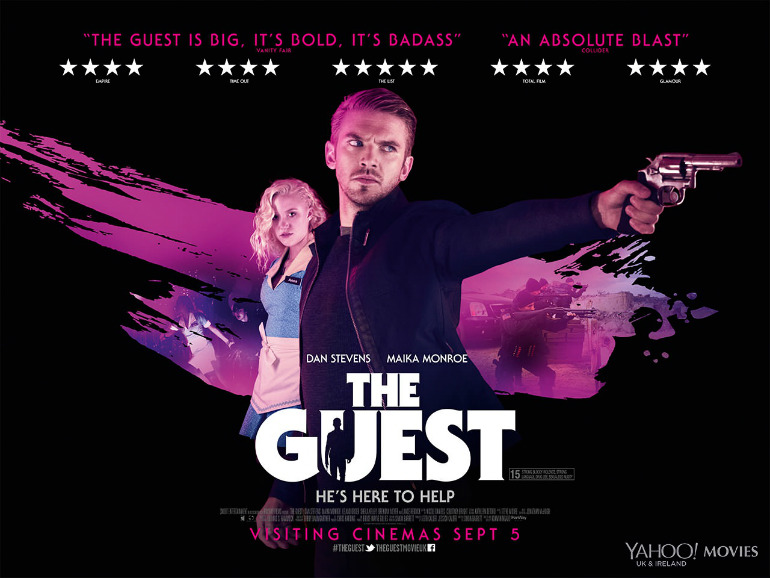
The Guest poster

Honestly, it really is shit. It’s a shit film for lots of reasons, which I will painstakingly rake over presently, but first an explanation for this post’s sub-heading.

The only reason I even saw The Guest was because of the reviews. I’d seen the posters for it (well, I’d seen ads online of the poster, to be honest) and thought it looked complete balls. The posters look like the ones you get for films when the actors have clearly disowned it, have refused to do any more promo shots, so the marketing team are blatantly cobbling the promotional imagery together from whatever scant photos they’ve already got.

But Rotten Tomatoes, IMDb and Metacritic all showed the reviews are really high percentages, really positive, and from real reviewers too, not just whiny ass-clowns like me. So I naturally thought it was a quality sleeper hit.

Rotten Tomatoes review The Guest
Never again will I fall for this

No. No it isn’t. It is, as previously stated, shit. It is, however, cleverly positioned as both an ironic homage and a stylistically self-aware movie. This has side-swiped the reviewers into claiming it’s a successful piece of work. It isn’t though, remember, it’s actually shit. Reviewers are cowards.

They’ve seen each other gradually loading this rancid crap-heap up with plaudits and back-patting, looked nervously around to see if people are joking and, seeing that they aren’t, have scribbled down their own glowing praise. They don’t believe it, not for a second, but they daren’t truly say what they see.

They’ve also fallen into the worst trap of all and started using the phrase ‘cult classic’, whilst it’s still in the fucking cinema. Things can only become cult classics when everyone looks back and thinks ‘Blimey, people actually did like it’. Pre-emptively saying something will be a cult classic is basically saying ‘This isn’t very good, but people might look back fondly on it’s shitness’. Lame.

This is a thriller, so it says, of a soldier returning from war to visit a dead comrade’s family, and the slow reveal of the soldier’s own problems. So far, so good. It isn’t a new idea, but it’s a good one to keep people ready and waiting for the thriller bit to come out.

The trouble is that this is very badly put together, awfully scripted and woefully shot. The acting is risible and the pacing and tension almost non-existent. It all just happens, with new characters and plot points coming from nowhere. It wavers from being a straight story, to being a parody, and back again and again. It does this so badly and so often that it doesn’t strike you as being on purpose, and therefore it’s just annoying.

Dan Stevens doing 'subtle'
Dan Stevens doing ‘subtle’

Dan Stevens is actually quite good, although without any shred of nuance, but in such a bog-awful film that it may actually be hiding the fact that he’s not very good. How he’ll get another lead role after this I don’t know, but then I can’t fathom how this film made it out into the real world at all. It’s nothing more than an exercise of ‘what can I get away with’ on the part of the writer/director, and the last 20mins particularly will stretch even the most ardent viewer’s patience, to the point of anger I would say.

This is B-movie piss-taking of the audience by the film-makers, and the audience has every right to be angry with them after spending £10 and 2hrs of their lives on it. That’s to say nothing of the reviewers don’t forget. These people are supposed to recommend films for their readers, people who only get to see one or two films at the cinema in a month. We, unlike them, don’t get to see 5 films a day, for free, so telling us that this is a 4* experience is a disservice, and you should be as ashamed as I hope you are embarrassed, reviewers all.

Film Review: The Day of the Jackal


James Tawton's avatartawtalitarian

I’ll put my hands up here and admit that I am in awe, not only of this film, but of its lead actor, Edward Fox, the Jackal himself.

The bloody Jackal

I make this admission so that you can accept from word go that this is not an impartial and purely technical review. It is, in essence, a mini-sermon on why I think I love it so much, and why I think you should too.

Firstly though, a nod to the book. A novel about the 1960s, published first in 1971 by Frederick Forsyth, one of the UK’s pre-eminent thriller writers. It captured everything about that time perfectly. The first generations of disaffected post-war colonial youths, abandoned by their leaders. The British, proud and self-righteous, the French, disorganised, disillusioned and delusional. To the rest of Europe, and even in most of France, the French-Algerian conflicts were a seen as but footnote…

View original post 682 more words

Film Review:Under the Skin


Scarlett Johannsen in Under the Skin

Much has been written of Jonathan Glazer’s return to directing, after a 9-year absence, and even more has been written about not only Scarlett Johannsen’s seemingly against-type casting, but more still about her full frontal scenes.

I confess that I had read none of this hype and hysteria, in an attempt to avoid giving any of it away, as I realised that I wasn’t going to have time to read the book before seeing the film and, thus, needed a spoiler-free run at it. So, I went into it knowing only the flimsiest of ‘alien seductress, gonzo filming’ bases for the film.

Notwithstanding the fact that the whole evening before and after watching, and the watching experience itself, had an uncomfortable and literally otherworldly and alien feel, for reasons best withheld for now, this was an odd experience for me.

I’m a seasoned watcher of the strange and serious, the appalling and atrocious, the profane and violent, the weird and wonderful. There is literally nothing that, given the opportunity, I have turned my eyes away from. As best as possible I live in a world of regrettable action, not squandered opportunities. So, in a filmic sense I feel well traveled, but this film was a head-scratcher for me.

Johannsen’s character is clearly not of this world, from the very outset. She appears in a pointed and yet ambiguous and unreal state and then proceeds to drive around Glasgow, speaking to the natives in real life and garnering the kinds of responses you’d expect of people encountering Scarlett Johannsen on a ring-road outside Tesco. This device, to create an unsure response in people is clever, and the mix with real actors and the public is also deftly handled.

Where it grated with me, and where the film grated overall, was in the purpose it was all supposed to be driving at. The staccato music and choppy editing, the gonzo filming mixed with elegant set-piece shots. I couldn’t work out if it was a mess of stock contrivances, or an art-house mash-up, or somewhere in between. It has a very obvious underlying theme, which is largely explained in the first scene, but I couldn’t fathom what everything else was trying to show me.

Johannsen is admittedly very good. She can act, no question at all. The cinematography is excellent too, except that I felt I’d seen it all before, in any other film set in Scotland. Every shot could’ve been lifted from Trainspotting, Local Hero, Morvern Callar and a dozen more. There was nothing original here. And yet, I was rapt, after the first 15 mins that is.

So, why aren’t I completely slagging it off? In fact, why am I bothering to write this at all, if I’m so unimpressed with it?

The evening I watched it was a strange one overall, which set my mind against the film from the off, and I felt actually angry that I’d sat through it all. It was so disjointedly up its own artsy ass, and yet obvious and cliched too, that I felt annoyed and slightly taken advantage of. In the next few days however, having thought and thought about it, my mind has shifted.

On its own merits the tale of growth, of being born and developing a sense of self in what is an alien existence to her, is powerful. The unpleasantness of some of the watching, from an emotional as opposed to a visual sense, was what made the transition happen for the audience too. I feel that this is the case anyhow.

What was strange was the fact that Johannsen’s full frontal had to be mentioned to me a couple of times after the film before I registered that, yes, that was in it. This is either an indicator of my obliviousness to nudity through frank over-saturation, or a marker of the film’s ability to move the viewer into a state of complete acceptance of that not only not being Scarlett Johannsen you’re watching, but not even being a human at all.

I’m going to reserve judgment on that one for a while yet.

It’s OK to cry. And it’s OK to think that it’s not OK.


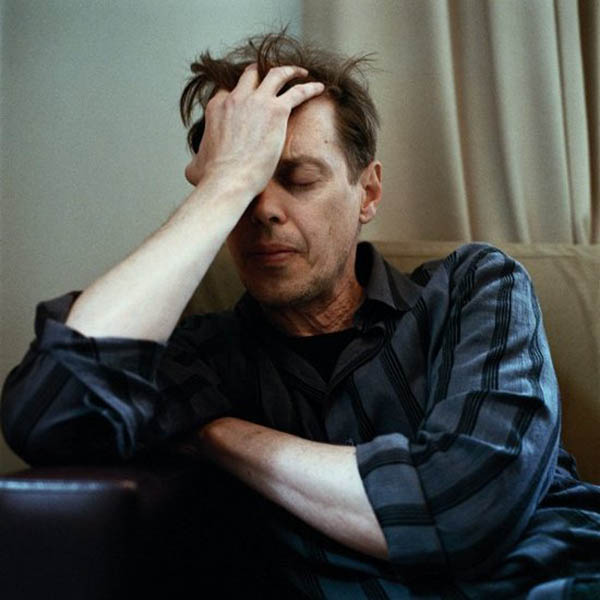
Steve Buscemi crying
It is OK to cry, even if you don’t know why you’re doing it.

Crying is something that everyone has done, at least once in their life. Though maybe not much, or at all, since those first few squally seconds of life.

When you’re very young it’s completely normal.When you’re upset, annoyed, disappointed, worried, angry, scared, hurt, tired and everything else inbetween, you’ll cry.

And that’s OK. You’re not only allowed to cry, you’re expected to.

‘He’s only young’ they will say. Often with more affection because you’re crying.

When you get a bit older, it suddenly becomes childish and even sneered at. People are embarrassed of you, even your own family and friends, a bit at least. You can only justifiably cry if you’re in a collectively saddened state – usually a funeral. Why is this?

When you get much older still, then sentiment comes back into vogue and you can be excused your lapses into sadness or melancholy. People assume that the elderly have an excuse, probably driven by burgeoning senility and memories of irrelevances that are their only comfort.

Actually both presumptions are wrong.

Children are not pathetically unstable, and neither are the elderly.

True, children do act childishly, and the elderly do act in an often unpredictable fashion, but this is merely down to behaviour patterns and priority sets that ‘adults’  – the 17-60 year olds – don’t share. Children and old people don’t have your cares and concerns, so they don’t have your borders and restraints.

Once you’re supposed to be ‘grown up’ then you are supposed to manage your reactions and emotions.

Rubbish. Weeping is as grown up an activity as I can think of. Admitting your fallibility and your sensitivity, even if it’s only in a room on your own, watching heart-wrenching videos online, is true. It’s a true act.

Crying can make you feel like you’re not keeping it together and, if that makes you feel unhinged and uncomfortable, then it’s OK to feel troubled. But you don’t need to. When you get the sore nose and the welling eyes you don’t need to hide it. Even with your partner or spouse in the room, when they catch you sniffing and smile because they’re surprised at your unusual display. You’ll feel daft, maybe even defensive or angry. You should.

It’s because you’re not supposed to be upset about trivialities. Not just because you may be British either. You may be a girl, and thus given free reign to cry. But you know that that’s annoying, and loses its credibility because you do it too much. You know that there are different kinds of crying though, but you don’t get the sense that people understand or appreciate that. So it ends up being the same, and seen as silly.

Small miseries are OK to cry about. Losing a friendship, the death of a pet, a display of emotion in someone that you’ve never met or even heard of before. It shows that you give a hoot.

It shouldn’t be your default position, no, but it shouldn’t have to wait until somebody dies.

The value of nothing


The greatest development of the 20th century was undoubtedly the internet.

Whilst there were bigger and more immediately impactful developments, like the hydrogen bomb for example, it’s the internet that has truly unwrapped the world.

The flow of information, once hidden or difficult to gain, is now like a champagne cork frozen into a permanent state of just being popped. It gushes, unstoppable and uncontrollable.

For countless millions of people this is great. It means access to knowledge and communications that they would never have had. News, blogs, information, data, books, films and music.

For everyone else, the billions who already had access to this stuff in other formats, it unfortunately meant an irreversible crippling of value.

To have access to anything you want, whenever you want it, does one thing brilliantly: it diminishes the inherent value in all of those things. This is as true as the light from the sun and the flow of the sea.

Let’s take one example: music.

Digital music has meant that anyone can have access to anything. Every album you’ve ever wanted, in no more than a minute, downloaded. Bang. Sounds great, right?

No. Actually, it isn’t.

When listening to a new song meant getting it from a shop, or catching it on the radio, then it was an event, an achievement in fact, to not exaggerate the event at all.  It was really difficult to hear stuff whenever you wanted to. For more obscure tracks or albums, it meant getting into record shops or sitting in bedrooms, listening to crackly records. Hard work, creepy even, but rewarding.

Mixtapes. Mixtapes were the most amazing thing you could be given. And they were always gifts. No-one made a mixtape for themself, so they had personal worth too. Collections of personal songs, all of divergent types, quality of sound and taping skill. Mixtapes were often the only place you owned a particular song too. They were precious.

Ever send someone a mix CD. An mp3 playlist? No. Why would you? Everyone torrents everything.

When I first found out about torrents I promptly downloaded every Stones album. I’ve never listened to them. Not one. I have thousands of tracks and albums on my Mac that I’ve never listened to. I still buy CDs. I listen to them on repeat.

Here’s the thing: If something’s easy to get, if it’s ‘on a plate’, if it’s free and easy to get, then how does it compare to something equivalent that you go out and hand over £10 and bring back in a bag? Something tangible, and yours. Not a copy of something, that everyone else has got too?

What about if you buy your digital stuff? Great. That’s great. Sorry though pal, you’re in a spectacular minority and, even if you do, how valuable is that 79p song? Not even as valuable as 79p. It’s just disappeared into your 10 million song library. It has no true value, and the artist is fucked.

The internet distribution opportunity for individual artists is amazing, there’s no doubt about that. But, the customer has to play their part, and they don’t.

I can release a book right now into Amazon. If it sells, I earn fuck all. Sell through iTunes, sit back and count the money coming in? Nope. How about Spotify? Ha!

I say this now – no fisherman is happy to be selling to/via Tesco. No artisan happy to be flogging shit through IKEA. It’s the fear of no other choice for those people. How happy are you to support that?

Ubiquitous presence breeds contempt of the highest order. Worse, it reduces input for the maximum output, but the originator doesn’t get that output, irrespective of what you pay. And you pay cheap.

Take some pride in your purchases. Purchase only that which has value, true value. Appreciate what you have, though it be reduced in number by the necessity of your spend. Its necessity is its worth, and its worth is your reward.

Be creative, no matter what.


van gogh

Be creative. You should always be creative. Even when – in fact, especially when – you think you can’t.

The best thing about creating anything is that, no matter what anyone thinks or says, and no matter whether anyone likes it or not, that thing exists.

william blake

Whether it’s a song, a painting, a drawing, a sculpture, a poem, a story, a script, a novel, a cartoon, a comic, some clothing or anything else, it is a real thing.

kafka

There are uncountable numbers of creators who, in their own lifetimes, were not only unpopular but even completely disregarded or utterly ignored. There is no accounting for the foibles of taste and awareness, and this will change as surely as the seasons, and no-one can make that happen, or stick.

Days, weeks, months or years from now that thing may be rediscovered, by you or somebody else, and whatever sat around it at the time, whatever intentions or baggage, can fade into the distance, revealing it anew for that new discoverer.

Even more important than anything is to create, whether or not you think it’s any good or not. Especially if you think it’s shit. 

penguin-moby-dick

Shit things can only get better, and passion shines through shit better than through anything else. Shit is like a prism for passionate works of art and literature. One person’s shit – and this includes yours – is another person’s shinola.

In their own lifetimes, and in the time of their own creation, everything you see in this blog was considered shit either by the public, the establishment, critics or even the creator their self.

There is hope for us all. As long as we do it. So, do it.

Design a site like this with WordPress.com
Get started