Oh, Whistle, and I’ll Come to You My Lad – M.R. James


>

In the 1800s there were an awful lot of accomplished men, who achieved over and above their fellow man. M.R. James was one such man. Linguist, Medievalist, biblical scholar and palaeographer (no, I don’t know either). Where James is best remembered now however is as a prolific short-story writer and, more specifically, ghost story writer.

At the end of the Victorian era people were still very much in the thrall of spiritualism and a fervent belief in the afterlife and everything that dwelt there. As a result there was taste for the mysterious and the macabre, and ghost stories fit the bill perfectly.

M.R. James produced as solid a collection of short and neatly crafted ghost stories as you’ll find anywhere. Each one is set up in the most understandable and natural fashion, with men at work, at study, at prayer and noticing, all of a sudden something not quite right, something amiss. A story they’re told that seems odd, an engraving that doesn’t look as it did before, something out of the window they weren’t expecting to see. These men are always unflappable and clear-thinking intellectuals, not prone to dalliances with fancy, which is why the stories succeed. They succeed because, far beyond needing to convince the reader, who is by definition looking for a strange thing to happen, James is making sure he creates a sufficient device to convince his own character, who is entirely unlikely to believe in a strange event.

And so, we have the most well known of all M.R. James stories, ‘Oh, Whistle, and I’ll Come to You My Lad’.

Parkins, Professor of Ontography takes a summer break on his own to the coast, ostensibly to improve his golf game, but actually to remove himself from other’s company, for he’s a neat and private man, not given over strongly to interactions with others. Whilst away a colleague asks if he would take a look at ruined Templar site on the east coast at Burnstow. Although he’s put out to have to carry out such a task he does so anyway and, looking around the scrub at he base of what could be a gravestone, he discovers a flute.
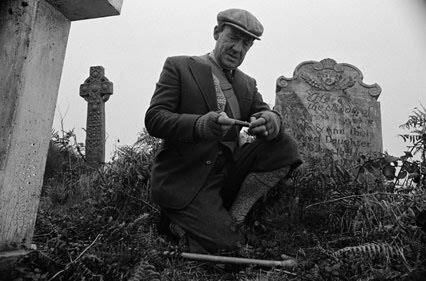

The disturbance of this ancient site and the removal of the flute is one thing, but the Latin inscription, roughly translated to the name of the story, and this blog post, is quite another. It is nothing less than a warning, even though it reads as innocently as a message, maybe a greeting or saying of sorts.

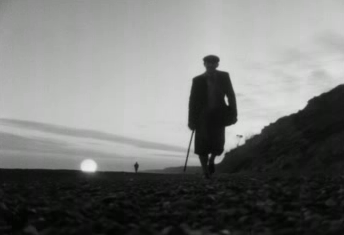
Inevitably the Professor blows the flute and emits simply an edge of the hearing single note, of infinite strength, but complete softness, that cries out across the dunes and beach he’s walking home along. Almost immediately, the middle distance, he sees the outline of a figure, if only for a second. Blowing the whistle again in his room causes his windows to blow in and bizarre visions of figures running and being pursued on the beach start to infect his sleep and even his waking, but closed, eyes.

What follows is a terrifying series of night-time visitations, where figures, apparitions or ghosts appear in Parkin’s room. The man, a man of learning, cannot reconcile his education with his senses, and his room neighbour, a Colonel of some stoical stuff attempts to help him make sense of it all. He can see that Parkin is in some trouble, but he can’t do anything to help him.

The atmosphere is kept in a clever mix of suspense and complete normality, with the comings and goings of a sleepy guesthouse punctuated with the raw terror of this visitor, called from an ancient grave by this man.

Ultimately it becomes to much for Parkin, driven half-mad by the bed sheets moving and windows crashing, to say nothing of the shadow running figure in the distance, always running, never getting closer, and he rids himself of the flute.

The James put this all together in such a short amount of pages is a real craft and his anthology, which he somewhat sniffily put together, has around 30, each more surprising and creeping as the next.

‘Oh, Whistle…’ epitomises these stories though and is the stand out. For extra amusement you can also track down the short film, with Michael Hordern as Parkin. Chilling.
Money


>Like nearly everyone else I have some, want more and need less. I am smart enough to know that it delivers little in terms of genuine happiness, but I also reconcile this with the knowledge that I know exactly what I would do if I came into some money. Of course, I would use it wisely, settling debts and creating savings and security for my family. Of course I would.

That’s not the point though, is it. The real point here is that I (like you) am, in effect, waiting for money to arrive to solve my problems. But the reality is that I don’t really have problems, I’ve just not got a completely simple life. I don’t have lots of money in the bank, a mortgage free house, cars that never break down, and a job I do for love.

People say that we live in different times now, but really we live in times not massively different from others, because they’re all relative to expectations. We seem to expect more for ourselves than we have at any point, the familiarity of ownership breeding our contempt. I believe that this has always been so, and it will always be the case, that people feel they are due more than they currently possess. It’s the cult of celebrity, a relatively new phenomenon, however, has exacerbated this by promoting the dull and ignorant into the limelight, on the basis that people will associate and empathise with these ‘real’ people, and consequently patronize the TV channels and sponsors associated with them. It’s a pure marketing strategy, and fair enough, but it’s confused people’s perspectives.

We see the rise of the chav superstars, the millionaire Big Brother stars, the X-factor scumbags, N-Dubz, Cheryl Cole, Wayne and Coleen Rooney, the list is endless and it keeps growing. It’s relentless and painful – the onslaught of these people with no real value, being swamped with money and relentlessly paraded and presented as ‘normal’.

The biggest con of the 20th century was the elevation of normal people to celebrity status. To be famous for fame, celebrated for only your notoriety is a pathetic indictment of society, but a part of it that continues apace with it’s glamourisation of imbeciles and victims. But it’s really the taunting nature of this celebrity which is so bad. People are reminded time and again of the lack of the famous person’s attributes, but that they are famed and remunerated anyway. So, it continues that people are reminded of their own lack of disposable income, money that they cannot fritter away on clothes, cars, holidays, jewellery or whatever else these people seem to spend all of their time doing.

The money factor is interesting in these people also because, for all of their wealth, they seem to gain little solace and happiness from their difficult and complicated lives. They are born into lives of mis-matched relationships, damaged psychologies and limited mental capacity and so, notwithstanding the money they have, they continue like this. They have repeated damaging marriages, spats with managers and entourages, break ups with friends and family, bleating and weeping showcases in the pages of the cheapest weekly tabloids, on a weekly basis. All of this is because they are who they are, and the money hasn’t changed that. It cannot change the core of person, except to make them worse, more self-centered, paranoid or depressed. The stupid people just have more expensive ways of doing all of the self-destructive things they dreamed would be goals they’d never attain. So they get drunk on more expensive booze, take better drugs and get beaten up and pass out in more expensive homes and hotels. But they still do it.

I know that you’d not hear about this stuff, because it wouldn’t be car crash enough (the only thing we like more than a scumbag doing well is someone utterly fucking it up) but I don’t recall ever hearing about a council estate, low income ‘celebrity’ getting loads of cash and doing something long term and wise with it. No-one has ever, to my knowledge, gained loads of X-factor cash and invested it into mutual funds, paying of 80% off of their mortgage and spending more time with their family.

Actually, I wouldn’t be surprised if they do, but there’s the rub again. We don’t care, because we actually want to salivate after the bling-wearing, Cristal-slurping, sex-texting, Caribbean-holidaying, photo-shooting numbskulls with the money, or the money we think that they must have.

It all comes back to the money=happiness equation though. Money could certainly buy you the ability to be happier, because it could get rid of a few things that make you unhappy, or annoyed at least. But it can’t actually make you happy. Not if you have a mind and a desire for enrichment of the soul. All money actually does is make you feel as if you’re missing out, and you could spend the rest of your life waiting for your moment, and cursing that it hasn’t arrived yet. Grasping that lottery ticket and feeling astonishment and anger when you don’t win, but someone wins, so it could/should be you, shouldn’t it?

No, it shouldn’t, and you’d do best to remember that because the longer you spend moaning to yourself, the quicker your life will ebb away and the more jaundiced and faded a person you will become.

Unforgiven – Clint Eastwood


>The great thing about Clint Eastwood is that he’s great.

Aside from some admittedly embarrassing films in the 70s and 80s when that odd woman Sandra Locke had her claws into him, he’s been pure gold. It says something about a man when people refer to other people as being a bit like you. ‘He’s a bit like Clint Eastwood’ you might say, because that way people get it immediately. They know that you mean a hardass, who’s not a show off, and is cool as you like.

Clint started this really back in the very early days of his acting career, on Rawhide. Yes, he was the fresh faced, and improbably named, Rowdy Yates, but he still had that look already. The Squint. No-one does the Clint Squint like Clint. No-one would dare to try. Charles Bronson had a good try, but he never really managed it. He just looks shortsighted.
Where Bruce Willis’ smirk seriously shortened his career prospects though, Clint’s own facial tic has made him the biggest man in movies. Bigger than John Wayne? Yes, I think so.

It’s a bold claim to make, but I believe that what Clint has done for movies overall is unsurpassable. And (drum roll) that includes the Western. Wayne may have been the greatest Western actor of all time, but that was before Clint.

Even before Unforgiven there were at least 6 great Clint Westerns that tore up the Cowboys n’ Indians template: The Dollars Trilogy, Outlaw Josey Wales, Pale Rider and High Plains Drifter. Besides these are the slightly less revered, but still excellent, Hang ‘Em High, Joe Kidd, Two Mules for Sister Sarah and, of course, Paint your Wagon.
But the icon was born back in the spaghetti westerns of Sergio Leone and The Man with No Name – an iconic reference of the Old West, but one Clint never played with bravado. Instead he played it with pathos and regret filling ever step.

Fast forward 7 years from his last Western, Pale Rider in 1985, and Eastwood pulled on the spurs for what would be, intentionally, his last ever Western. Unforgiven.

Unforgiven is the story of ageing gunfighter William Munny, and his decision to do a final killing for money, as his idyll of family life on the prairie starts to get too hard and affecting to his children.
Scripted way back in 1976, Eastwood decided to hold back on making the film until he was old enough to encapsulate the character and, with the back catalogue of cowboy legends he’d already created he was able to authoritatively put that persona into it’s place in history, stepping away with a resounding clap of the hands and a ‘job done’ on his snarling lips.

Munny is a cold-blooded ‘killer of women and children’ with a deservedly fearsome reputation. Unlike most contemporary men in this genre he has found old age however and is now wise of his misdeeds and keen to raise a young family far away from his past, and from other people.
Following the death of his wife he is left with the raising of his two young children and, knowing he is no farmer, starts to see the writing on the wall for his future. When a young shooter, the Schofield Kid, comes to him with a proposition to avenge an assault for a tidy payday he initially refuses but inevitably relents for his family.

The story then follows his travels to kill the assaulters of a prostitute in the town of Big Whiskey, policed by the violent Little Bill, played to perfection by Gene Hackman. Little Bill is framed very quickly as a new wave of horrendous violence in the West through his treatment of another ageing gunfighter in town, English Bob, played by Richard Harris. Little Bill delivers the severest of beatings to Bob, establishing his mantra of disrespect for the gunfighters of old, and placing himself as the alpha male in town.
After one of the town’s prostitutes is badly cut by a group of young men passing through it becomes known that hired killers are on their way to avenge the assault, paid for by the prostitutes, and Little Bill makes clear his intentions to deal with them.

Munny is a relatively downbeat character throughout the film and the juxtaposition between his jaded countenance and that of the eager young Schofield Kid is a recurring theme. Ultimately Munny’s edge is that of a taker of lives, whereas the Kid is keen to ape his hero but, when it comes to it, the killing changes him and he gives away his guns and leaves, scared and sick.

After Munny, sick from cold and wet weather, himself takes a beating from Little Bill, he is laid up outside of town and tended by the cut prostitute. Ned and the Kid visit town often but, following the eventual killing of the young men, Ned decides he’s done with killing and leaves. As Munny and the Kid go to get the final man Ned is apprehended by Little Bill’s men and is whipped to death by Bill and placed in a coffin, with a sign around his neck on display in the town.

Incensed by this, Munny finally does what we know is coming all along and confronts Little Bill. Walking into the saloon his doesn’t hesitate. There are no speeches, drawn out stand-offs or anything else. He simply announces why he’s there and promptly shoots Bill and 7 other men, starting with the barman, for having Ned on display. When you spot, out of the corner of your eye, that Bill isn’t quite dead and is raising his pistol, there’s a moment of doubt about the ending, until Munny kicks his hand away and shoots him in the face.

It’s a relentless but definitive moment in the film and not without humour. Munny announces before he leaves the saloon, to the town that he knows must be watching –

“I’m coming out. Nobody better shoot at me, or I’ll kill him. Then I’ll kill his wife, and his friends, and burn his goddamn house down.”

Munny leaves town in full view of everyone, and they do nothing. These are people who think they’ve seen terror in Little Bill, but they now know they’ve just seen a bully. This man is terror.
Eastwood is able to play Munny as absolutely terrifying, but also absolutely unconcerned with his reputation. He sees Munny as man apart from his past, regretful but not overly concerned with reputation or legend. Not a million miles away from Eastwood himself.

What makes Unforgiven such an almighty film is that being a Western is almost incidental to the finished product. It’s the canvas that lends itself so well to the man, and he knows it. That he knows he doesn’t need to do it anymore is testament to his own character, as much as to the ones he’s created.

Four Kings – George Kimball


>Kimball was the lead boxing correspondent for the Boston Herald throughout, what he proposes was, the last great period of middleweight, and arguably any weight, of boxing. It’s hard to disagree with the assertion.


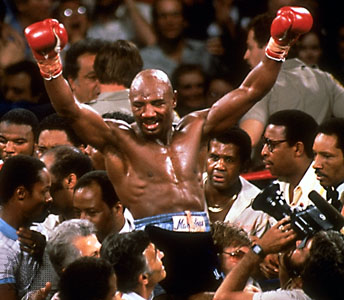
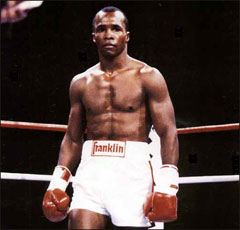
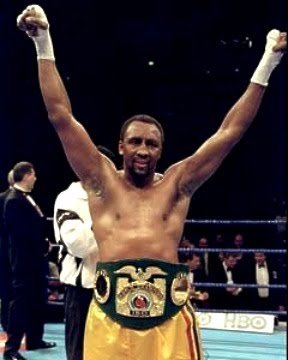
The four ‘Kings’ in question are Sugar Ray Leonard, Marvelous Marvin Hagler, Thomas ‘Hit Man’ Hearns and Roberto Duran. These four guys fought each other 9 times in total during the 1980s and produced some of the greatest fights ever seen by a paying audience. They are still accepted as being the greatest fights in any weight class.


Middleweight boxing is not a popular sport anywhere now, not with the massive commercial sponsorship surrounding football, basketball and other more ad hoc sports that require nothing more than a ball and some people. In fact, no boxing is very popular, not since the loss of Mike Tyson has the world been interested in boxing.

What Kimball does in this book is takes you on a step back in time to the heyday of when fighters like these four could stop the country and, even then, command guaranteed payouts in the millions, more than $10m in some cases. He also treats you to the closest piece of biographical analysis of the fighters, their teams, their management, the politics of the time and the changing face of American sporting life.

The Kings are amazing characters and I wouldn’t be surprised if you find yourself Googling the fights, or looking for more information on them individually. It’s hard to believe, once you’ve read this book, that there’s so little written on them, because Kimball makes the history seem massive. But that’s partly because, as a journalist he was right there. Literally with the boxers at the time in many cases.

He is also able to draw on his relationships with all the other journalists there, the trainers, biographers, historians, promoters, in fact I don’t think that there is really anyone he talks about that isn’t thanked in the acknowledgements as a contributor.

Painting portraits of boxers, from 10 year old kids to 40 year old retirees in a 350 page book is no mean feat, but you get a real feeling of affection and respect for these men, and you feel like you know them. Ray Leonard was the undoubted star, still is, but Hagler’s intensity and fear-inducing persona is right there, Hearn’s dis-connected yet playful countenance and Duran’s animalistic violence are all here to wallow in and enjoy.

As a piece of analysis this is a great book and the tributes paid to it by the back cover reviewers are testament to that. But it’s greatest achievement is as a work of drama, bringing the excitement of a time before Sky and the Internet, when spectacles like the Big Fight were something to live for.

Travelling


No, I don’t mean travelling as in ‘I’m going travelling in my gap year’, which is so abhorrent a conceit as to make my bile rise into my nasal cavity. I simply mean travelling in its literal sense of moving from one place to another.

It’s one of the ironies of successful modern living that, bereft of the need to strive to survive, we obsess with the superficial and mundane. Hairstyles, shoes, food, wallpaper, children, blogs etc are all so utterly inconsequential as to be microdots in the footnotes of human history and yet, for many, they are all-encompassing.

Travel is one of these things that people obsess about, in an angry and troublesome way, and I suggest that this is because of the over abundance of reliance on time. Time as a concept yes, but more so that it itself acts as a panic inducer.

Going to work is the thing that most people travel for. And going home, obviously. It’s amazing how these two journeys, the same journeys in many ways, can be so different. Depending on which way you’re going, and how, they are so strangely opposed.

BUS:
To Work – It’s a tiring and noisy place. Full of noisy children, youths with horrid attitudes and repugnant manners, large women reading TV magazines and eating crisps at 7.30am, windows dripping with condensation and traffic everywhere, beeping, crawling, stopping you. Making you late, making you a worse person by the second.

Home – It’s much of the above, but it’s also serene in places. You start in a packed bus and everyone steadily leaves, you gain more space and are able to increasingly relax. You can read your book, it doesn’t matter if you get stuck for a couple of minutes, because you’re going home and everything will be ok.

A sidenote to say that, notwithstanding the second aspect of the above, bus journeys are actually awful. They are truly dreadful and many is the time I have physically thumped my head on the plexiglass, or swore at yet another thunderous bang which some buses just seem to do at random moments. Like a nailbomb has just been driven over. They are dirty, broken and really bloody expensive. I’ve been on buses in Greece and Africa which are comparable to FirstBus, and that is a damning indictment of this shoddy and pathetic excuse for a company. I bet they’re rolling in it.

CAR:
To Work – Speeding and dangerous, sticky-eyed, angry and in no way truly in control of your faculties. Panicking that you won’t get your favourite parking space, furious when you don’t and beyond consolation when you have to park in the NCP because you left 10mins later than you usually do. The radio is both essential and wrenchingly annoying, you can’t bear it, but can’t bear the silence. In the winter, driving to work is like trying to reach the North Pole. It’s so barren, cold and lonely in your crappy car, and you know that you could die at any minute.

Home – Again, quite relaxing and pleasant. You get stuck in the rush home of course, but you can trundle a bit and not worry. You can sit back in your seat, rest your arm on the window ledge and watch the world go by. Listen to a bit of Radio4, maybe even Radio1 if you want to feel a bit better about yourself.
The finest bit is pulling up when you arrive though, because no-one is in your place and you can really feel like it’s job done and you’re home from work. Like a man.

WALKING:

I used to walk an hour to work and back and it was shit.

CYCLING:

Empowering and very good for you, there and back. But you regret it coming home sometimes and miss the pleasure of just sitting down to get driven there. Also, the need to carry everything on your back, even a change of clothes, is sometimes wearing. Punctures are just a nightmare too, especially on a long stretch, so it’s not really advisable.

ROLLERBOOTS:

I bet some people do this.

Conclusion:

My point anyway is this. Travel is a necessary objective and one that is merely the process by which we start towards the things we need to do: work, food, war etc. Where it riles us is in the time it takes away from us and in the massive inefficiences in process that it requires.

Compare almost any of the above to the equivalent of visiting somebody you love, or going to a show, or to anything else you’re looking forward to. It’s not the travelling usually, it’s the state of mind you’re in because of what you’re going to find at the other end.

Now, imagine that you’re leaving that person, the journey is even better.

Advertising


Where taste and odiousness collide are advertising and advertising executives found. In the mix of today’s headiest media output (a greater output by a vast multiple than any other time) advertising has become ubiquitous with popular culture and we’re powerless to stop it.

The advent of the corporation, following the rise of business in the boom years post World War II, led to the growth in marketing as a serious commodity that a business could be judged by. The popularity of businesses as brands was accelerated dramatically at this point and advertising was the catalyst. Bill Gates once said that if he only had two dollars left he would spend it on marketing, such is its importance in the world of corporate power management. In fact, when Kraft were purchased by Philip Morris they were overvalued in respect of their actual asset value because the brand recognition was so strong. Good advertising created that.

There is so much money behind advertising these days that the best film-makers and artists have been and are continuously involved. Big name directors doing adverts and shoddy promotional work with brand ‘partnerships’. They claim to be pushing the envelope, reinventing the genre, generating art through an accepted media. It’s a load of fucking bullshit and they should just admit that they were offered a massive wedge to do a job, like the rest of us would, and do. Except, we don’t get asked to because we’re not well known and have no endorsement to offer.

Where I really get annoyed though is celebrity endorsement. I don’t mean the kind of Heat celebrity endorsement either. Those guys – Peter Andre, Kerry Katona etc – are faces and nothing else. They have no discernible talent beyond the ability to stay in the public eye so, advertising is neither here nor there for them. They are the commodity. So, that not my problem.

My problem is the people who purport not to be fame-huggers and spend their time trying to push their artistry towards us. Kevin Spacey, Josh Brolin, Adrian Brody, Gwyneth Paltrow. The list is almost completely endless. They would have us think that they are artists and professionals, creative and sympathetic people. Often political and outspoken. But, they still do the advertising, for cars, cameras, perfumes and whatever else. These are multi-millionaires who are whoring out their crafted and well-paid personas for the sake of another cheque. They are gladly handing over their credibility, that they know people respond to, are are giving it to the brands to use. Because people see Kevin Spacey using a particular camera the assumption is they’ll think:

‘Oh, I like Kevin Spacey, Oscar winning actor, artist and director of the Old Vic, and he likes this camera, therefore it must share some of his attributes and I will therefore like it also’.

The worst part of this – no, not the part where someone is actually that stupid – is that he knows it and did it anyway. What a total washout of a man. What a charlatan.

Somebody once said that all art is prostitution. I believe that it is a prostitution of the idea, but not of the soul. I do however believe that any artist who decides it’s OK to take corporate money for their creation, their name, their face or their voice gives up the right to be called an artist. They are a whore and they can qualify it any way they want but it comes down to this:

If you give the world a set of values and qualities that you wish to be recognised by, and you attain that recognition from an audience of people, but then you sell the use of that trust to a third party, well, you are nothing more than a fraud and a peddler.

You have given up your qualities and you are merely a commodity that will be used by the man you’ve sold yourself to. Your ‘John’ in fact, for you are a whore.

Cricket: Local


I should perhaps be more specific here. ‘Local’ cricket in this post does not mean village cricket, it means County cricket. Village cricket could honestly take up a couple of posts on its own, but it would be nothing to do with cricket, it would be entirely about the associated politics and background scandal.

County cricket is an interesting area for a number of reasons. It’s a strange beast because it’s the relative equivalent of football on a local level, except far less popular. It’s fiercely rivalrous, but everyone claps for everyone else, and not sarcastically or ironically. It’s also the only sport where you can genuinely assert that somebody, in the crowd, will be at risk of either a broken jaw or some major bruising from a lump of leather hitting them at Mach II.

It’s one of the oldest pastimes we have in this country and people follow it for love. Like any sport it’s full of heartbreak and desperation. With teams collapsing under the weight of their opposition, of the script that was so clearly laid out being destroyed, then sitting through a kind of ritual humiliation, with key players reduced to the status of has-beens and also-rans in the space of an afternoon. There’s some excitement to be sure, but it’s not riveting, not for ages. Then it suddenly is, very. In the space of a few overs, it becomes tense beyond belief and every ball is a potential match winner.

The county rivalries go back hundreds of years, long before the players of old would have allowed their servants to kick a football around after they’d finished their chores for the day. Yorkshire and Lancashire, Gloucestershire and Somerset. They’re vitriolic and legendary.

Even so, it’s rare to get grounds full on any given day, even a sunny Sunday afternoon. The reason for this, I think, is that cricket is a patient and refined objective for the crowd. And ‘crowd’ by definition is a lot of people, whereas not a lot of people are patient and/or refined. Where are all these people who could be enjoying a pleasant and relaxing day in the stands of a fine old cricket ground? They’re doing something far less enchanting I’ll be bound. Shopping, watching tv, at the football – God only knows. In my opinion a game of cricket can be a simply lovely thing to behold

You have the pomp and circumstance of the teams lining up, the shake of hands, the patient collection of opposition players sitting at the side of the pitch, applauding their opponents as they enter the field. There is the skill inherent in a well trained bowling attack, the elongated spells of precision placement of pitched-up leg cutters, and the balletic strokeplay of experienced and talented batsmen, deftly dispatching balls to the boundary. There’s also the joy of being able to watch it all happen whilst enjoying a drink and a decent conversation with your companions.

You’ll notice that I haven’t talked much about the actual game, because you’ll just get bored. I have instead just tried to make the point that going to the cricket is a fine enterprise and one that too few people venture into.

I shall, I warn you, post in a far more detailed nature on the game itself and, be warned, I shall not title the post so accordingly that you may avoid it.

Comics as Literature


In modern culture the blurring of lines between genres, or indeed the format they’re distributed in, is not only prevalent, it’s increasing.

The advent of the graphic novel elevated comics away from the ‘Zap’ ‘Pow’ world of underpants worn on the outside, and childish visions of superpowers solving the world’s problems with a wave of an atomic fist. Books like Maus and Palestine were unashamedly political and sombre in view, mixing humour and pathos together as life is want to do, and never once falling into parody or over-sentimentality.

Whether comics are literature is a difficult question to answer, as literature gets a very broad sweep of the brush sometimes, as if it’s true to say that any text-based book is literature. Clearly this isn’t true. Many books are total rubbish, even those purporting to be literature are quite clearly not so. Not as far as the common usage of the word goes anyway. Ideas of literature are fairly generalised nowadays, but intrinsically the word is bound up in an image of Dickens, Steinbeck, Lawrence, Kafka, Murdoch, Hemmingway, Kipling, Kerouac etc etc, all sitting around drinking coffee and being awfully clever to one-another.

So, can comics echo this? Or rather, can they do as good a job, or better?

I’m yet to see a fully-blown argument which effectively presents both sides of this quandry. A quandry which really only exists for comic fans who feel let down by their intellectual enemies, or friends in point of fact, who won’t regard comics as anything other than the underpants and zap-pow brigade of unimportant cartoons that don’t move. But a quandry nevertheless, especially when you’ve got Watchmen being feted as one of the best 100 novels of all time by TIME magazine, not graphic novel mind you, but novel.

I know that younger readers, as with young readers of anything, won’t pick up comics because they’re cerebral, but then comics can be more ‘outthere’ at the same time because they’ve got a less intellectually critical audience. Not that comic readers are stupid, far from it, but they don’t all approach comics for that intelligencia hit, the one that people who read Gravity’s Rainbow get when they don’t even understand the looping, wandering text. Comics have the added advantage of starting and finishing plots quickly, and having pictures to chivvy things along, so they’re less of a bore if things aren’t happening at the speed you’d like. And, they’re easy to revisit if you didn’t quite ‘get it’ the first time round. Try reading Ulysses twice in a fortnight, you can do it with The Authority.

I love books. I’m a book fiend. I own thousands of books, literally. But I will stare down anyone who claims comics are trite and unimportant. I say that that person hasn’t read one for a long time, if not ever, and should really give it a go

Design a site like this with WordPress.com
Get started